
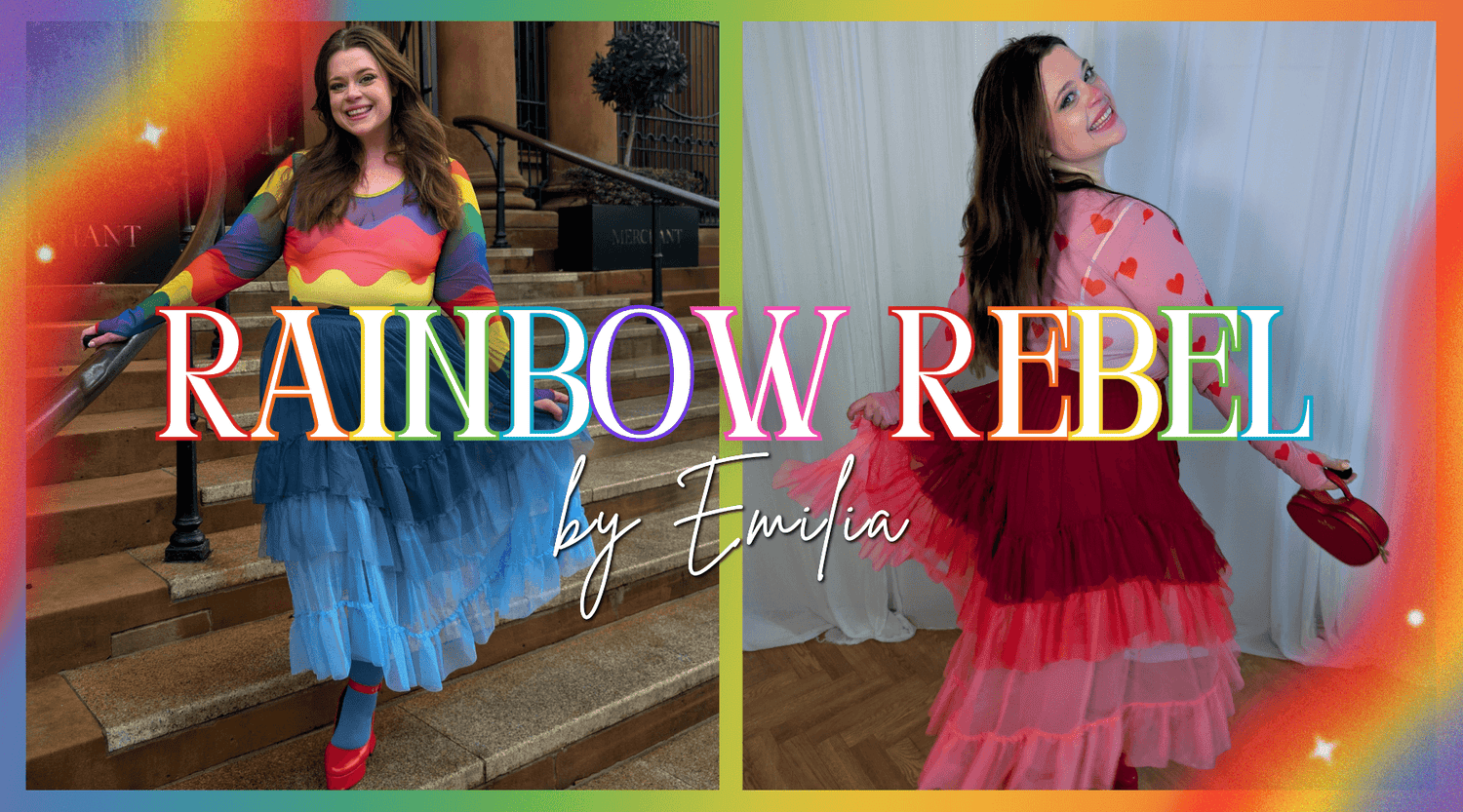
Hi, I’m Emilia. I’m a mental health advocate and proud plus-size fashionista, and I truly believe that mindfulness and your wardrobe go hand in hand.
Dressing for other people’s gaze can quickly become an endless, exhausting pursuit. The goalposts are always moving, and the "right" outfit seems to depend entirely on who is looking or what kind of mood they’re in. It can quietly chip away at your mental health under the guise of being "sensible" or "presentable." There is often a hidden pressure that suggests "flattering" just means looking smaller or taking up less space.
If you chase that approval, you enter a loop where even if you get it right once, you have to keep getting it right forever. That isn’t style; that’s just stress with better lighting.

The Self-Love Loop
Dressing for yourself is a completely different practice. It’s a slow build, a daily act of choosing yourself. When you dress for your own gaze, you stop asking what the world wants and start asking: Do I feel like me? What do I need today? What would make me smile when I catch my reflection?
This approach actually gives something back. The more you dress for yourself, the more you trust yourself. It becomes easier to wear what you love, which feeds your mental health in a very real way.
A wee check-in
Try this tomorrow morning (or right now, if you’re reading this with a cup of tea you've reheated three times). Ask yourself: Who am I dressing for?
If the answer is "them" (partners, strangers, or the internet) don’t panic. Just choose one thing that is purely for you. You don't need a full reinvention or a new personality. Just pick one detail that makes you feel a wee bit more like yourself to start the cycle.

Top styling tips (for real life)
1. Pick one “you” thing every day.
It could be tights that make you feel powerful, a colour that makes you happy, or a texture that comforts you. You don’t need a whole outfit overhaul, just one choice that says, "I’m here."
2. Dress by need, not by rules.
Instead of worrying about what is flattering, ask what you need right now. If you need comfort, look for soft layers and gentle waistbands. If you need confidence, grab that one statement piece or a bold lip. Your wardrobe should be a toolkit, not a test.
3. Make a default formula for hard days.
Mental health days are not the time to negotiate with 40 different outfit options. Pick a go-to formula you know works for you, like a comfy dress with boots, or an oversized shirt with chunky shoes. This lets you dress for yourself without using up all your energy before you’ve left the bedroom.
4. Treat it as an experiment.
You don’t have to commit to being "the person who wears that" forever. You’re allowed to just wear it once as a data-collection experiment. If you love it, amazing. If you don’t, now you know.
5. Wear the saved outfit.
We often save outfits as if we are waiting for a special occasion, but you are the occasion. The only wasted outfit is the one sitting in the wardrobe.

Using fashion to create joy
Joy is survival. It helps your brain remember there’s more to life than just getting through the day. Fashion is a surprisingly effective way to access that because it’s sensory, visual, and immediate. It’s a daily opportunity to say, "I deserve nice things."
You can do this by choosing textures that comfort you when your brain is loud, or using colour as a mood-lifter—not because you "should," but because a pink cardigan or a bright sock might actually make you smile.

Giving yourself permission
If experimenting feels scary, try the "10% Braver" step: add just one bold element to an outfit you already feel safe in. Or try the "Swap Test," where you change just one thing at a time so your nervous system doesn't panic.
Remember, confidence doesn’t arrive first. Confidence is what shows up after you practice choosing yourself. And if anyone has opinions? That’s their business, not yours.
6 comments
I so needed to hear this. I wish I’d been brought up with these values but at 53 it’s definitely not too late to apply them. Thankyou 😍
I love this, the swap test sounds super easy
Thank you so much for this .
I have copied your words on Joy for an illness support group I belong to . Xx
Oh thank you so much for this.
I used to wear all black and my Mum would tell me off. So now I wear as bright colours as I can. Even my hair and tattoos are bright colours!
And I don’t care what others think!
You go girl ❤️🧡💛💚🩵💙💜
Very much in tune with your words, wear what You like, no need to join the “that tribe/look/sub culture” be You. the only “label” you really need or want says “snags” on your tights !